
Tea Pickers in South India. (Photo: S.J. Hirom)
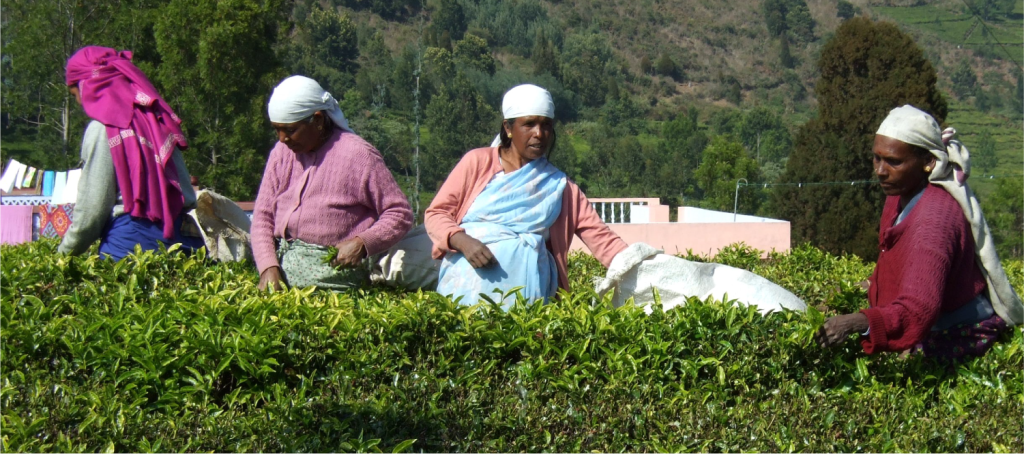
Tea pickers from South India. The pickers here are working on the Bandhumai Small Tea Growers Project, part of CISTA, (Confederation of Indian Small Tea growers Association) in Bandhumai Village, Yedapalli, Coonoor, Nilgiris, Tamil Nadu, South India. The project, originally initiated with Traidcraft, organised tea producers into self-help groups; identified new market opportunities in Fairtrade and organic production; provided business support and lobbied to improve legislation in the tea industry. Prices tripled between 2007 and 2009; output increased; the factory they use had to comply with payment rules: to pay better and collect their tea. The Bandhumai Association was able to get bank loans.
The new generation of small tea growers, who work with Fairtrade, have been able to build bigger and better houses and invest in new equipment ( e.g. for organic spraying of the crop) and education, thanks to the Fairtrade premium. They could do much more if they could sell more of their output on Fairtrade terms.
Nyawira, Young Kenyan Coffee Farmer. (Photo source: Fairtrade Africa.)
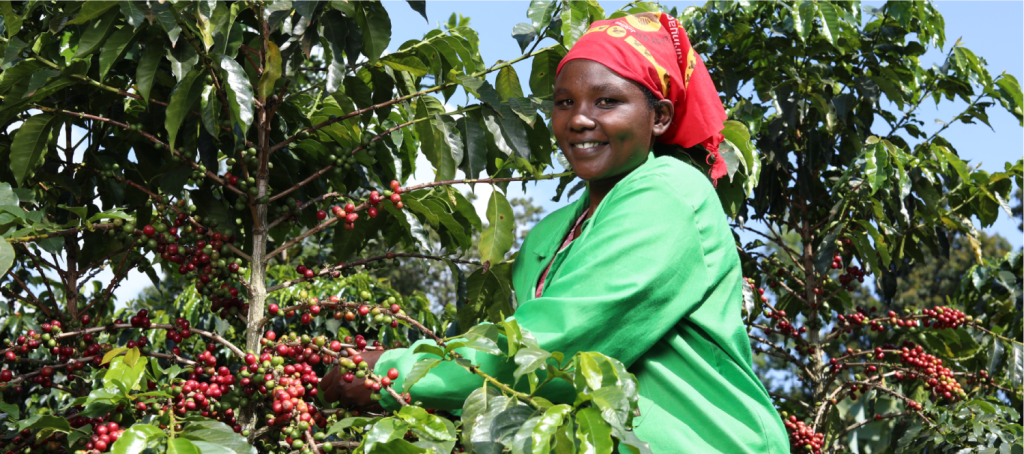
Nyawira Njiraini is a coffee farmer at Mutira Farmers’ Cooperative Society Limited, Kirinyaga County, Central Province of Kenya. (Photo source: Fairtrade Africa.)
Nyawira Njiraini, whotrained in coffee farming through the Youth in Coffee Movement for which she is now an enthusiastic champion, says:
“I am encouraging more youth to come into coffee farming because with new varieties that are more resistant to pests and diseases, it is easy and even cheaper to manage it and it will give you good production. My appreciation goes to Coop UK and Fairtrade Africa for encouraging us and taking time to train and encourage youth to get into coffee farming because we are getting a good income at the end of the year with which we are able to do other things, and it is improving our livelihoods.”
More here: https://fairtradeafrica.net/sustain-coffee-bridging-the-generation-gap-in-coffee-farming/
Raisin producer, Chile. (Photo credit: SJ Hirom)
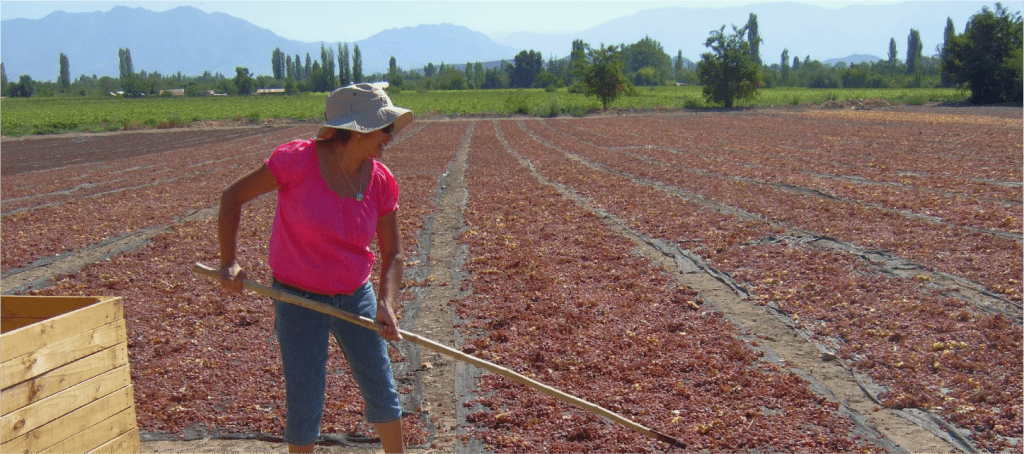
Pilar, is one of 28 members of a joint stock company, Mi Fruta, growing grapes in the Aconagua Valley, Chile. (Mount Aconagua is the highest mountain in the Andes and all of the Americas). Here she is turning the grapes to dry them in the sun for raisins.
Raisin production for export began when a company in England that needed raisins approached the Chilean Ministry of Agriculture to suggest the project. In order to have the services that would ensure the quality of their product, Mi Fruta had to request loans from private banks and the Ministry. With the loans, they trained the producers and acquired the necessary equipment for the factory where the raisins are treated and tested (they are washed, dried, subjected to a laser scanner and metal detector) to ensure the high-quality standards required by European markets. In a few weeks they made their first export of 200 thousand kilos of raisins to Europe, which was a source of joy and pride for the farmers and the beginning of a promising company.
During the last season, Mi Fruta exported 120 tons of raisins to England -its main customer-, 20 tons to Germany and 8 tons to Italy, figures that they hope to exceed this year. They also sold 95 tons of fresh table grapes to England. Their surplus is sold through other Chilean export companies and for local consumption.
Mi Fruta is inspected every year by the FLOCERT certification company to renew its validity and participation in the Fairtrade International fair trade system.
Guillermo Nieto, a producer and one of the 28 members of Mi Fruta, says that this associative project has allowed him to improve the family’s quality of life and give their children a good education:
“Before we had to sell our production of grapes and now we have the possibility of exporting raisins directly and at better prices, and those are the weights that give dignity to our work ”.
Peruvian Coffee Growers (Photo credit: Eduardo Martino.)
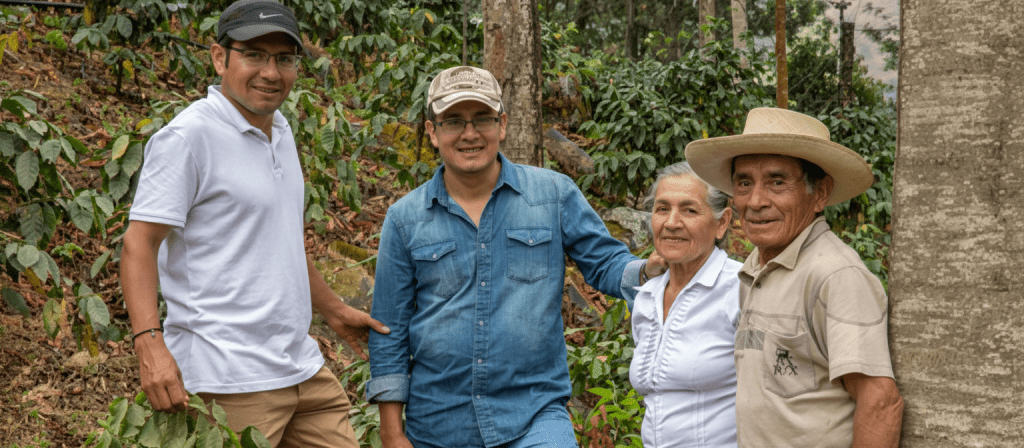
The Guerrero family, coffee farmers in Northern Peru.
Segundo (right) the father, whose family has been growing coffee here for 100 years, is the joint founder of the Norandino Cooperative which farms this area and sells to Fairtrade. He is concerned that local farmers will not be able to grow coffee here in the future because climate change has brought diseases and pests to their farms, which used to be disease free.
Hugo (centre), his son, has trained, with the help of Fairtrade, as an agricultural engineer. He is now pioneering sustainable methods to grow coffee on the family’s land, experimenting with different varieties in various locations, installing irrigation and introducing water saving technologies like agroforestry as trees cool the soil. He is focussing on organic approaches to improve the health of the soil so that stronger disease resistant plants can thrive. He says:
“Coffee prices are really low but I think
with Fairtrade prices we will manage to keep producing coffee”
You can meet the family and hear what they have to say about Fairtrade and the climate crisis here in this YouTube Video link: https://youtu.be/zzwEF0xahdo (2 minutes)
And this onehttps://youtu.be/ZLG7LVi0cnQ (3 minutes)
Rosine and the Cayat women cocoa farmers, Cote d’Ivoire. (photo and video credits: Fairtrade Foundation)
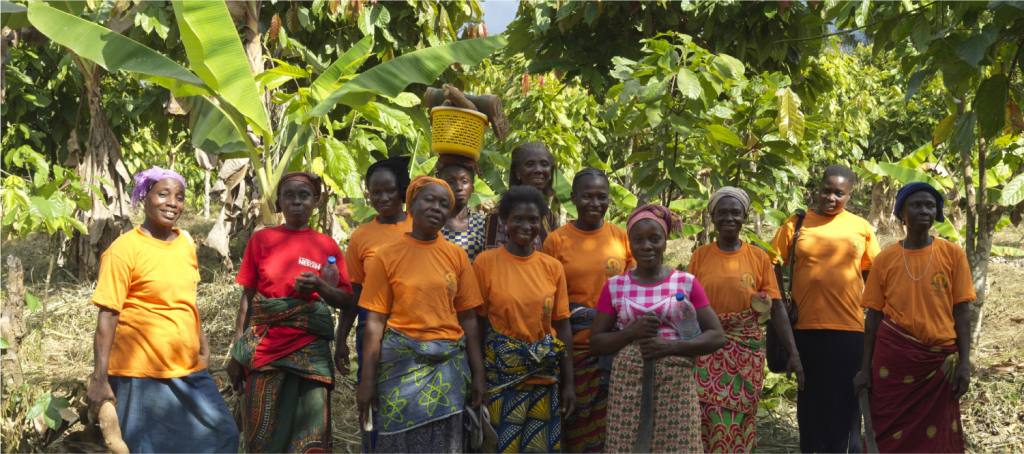
Rosine Bekoin (far left) with a group of women cocoa farmers from CAYAT women’s society, Biasso village group in the Cote d’Ivoire.
Rosine came to England in 2020, where some of us met her at a reception in the Houses of Parliament. Rosine is a cocoa farmer herself (unusually on her own land) and she is the General Secretary of the CAYAT Women’s Group. She told us about the lives of her fellow cocoa growers and what Fairtrade had been doing to empower them improve their situation.
In the following video Genevieve talks about plight of women cocoa farmers working for their husbands and then Rosine explains the actions they are taking with the help of Fairtrade to empower the women and help them earn a living income ( https://www.youtube.com/watch?v=yP5NR3BbdKE about 2 minutes)
For a more comprehensive account of why we need to pay more for our chocolate to ensure cocoa farmers can earn a living income (and so continue to grow cocoa!) this video (12 minutes) explains in more detail how Fairtrade can help.
The Story of Chocolate: Unwrapping the Bar https://www.youtube.com/watch?v=-XbP4cn8xhU
Micah Tarus, Fairtrade Coffee Farmer, Kenya. (Photo and video credits: Fairtrade Foundation)
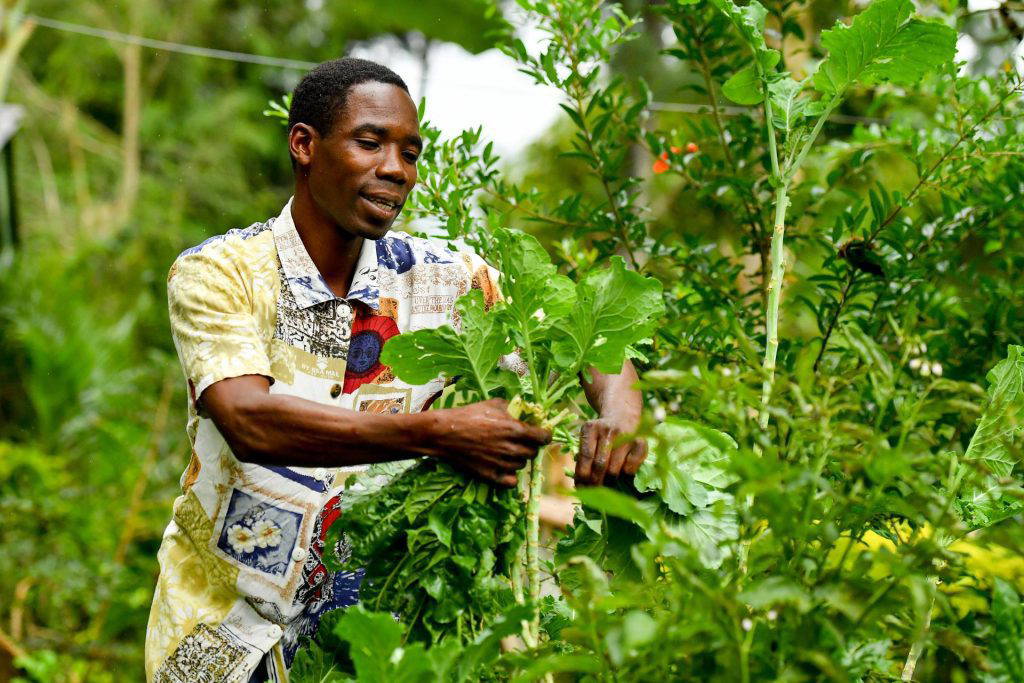
Micah is using the income from his Fairtrade coffee sales and the knowledge gained from the Fairtrade training project, the Climate Change Academy, to adapt to the effects of climate change. As well as growing a cash crop of coffee he also grows food crops for his own use and local trade in new ‘vertical’ gardens.
Micah talks about how Fairtrade has enabled him to tackle the impacts of climate change in this 3 minute video: https://www.youtube.com/watch?v=_rR0YqhDmIw
Ghassan Abu Malla, olive farmer. Palestine. (photo-Zaytoun)
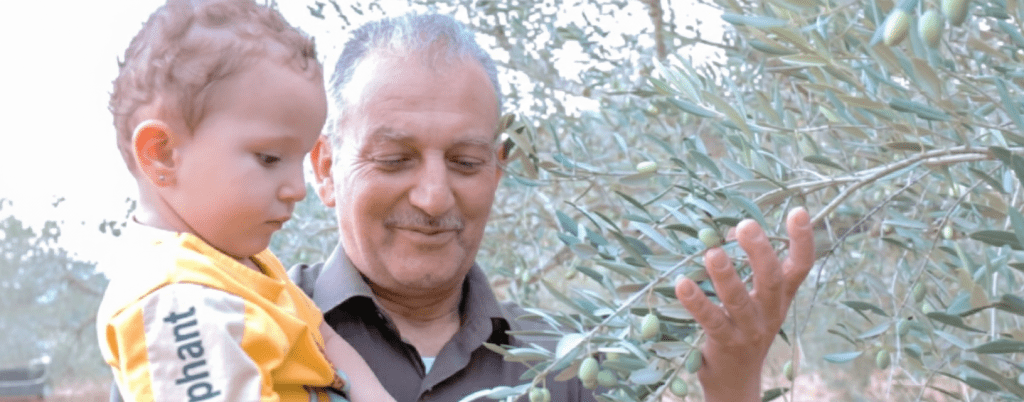
Ghassan Abu Malla proudlyshows his granddaughterthe olives during the 2024 harvest.
He told Zaytoun:
“Fair trade has been more than just a concept—it’s been our way of escaping the exploitative world of commerce. It’s given us, as farmers, a chance to regain our dignity and control. Years ago, we embraced this, and it has made a real difference for us and our families. We’ll keep going as long as there’s thyme to grow and olives to harvest.”
More about the olive harvest from Zaytoun here(https://zaytoun.uk/news/tension-and-hope-as-the-harvest-begins/ )